Mercedes-Benz X-Class reliability
Fails the test more often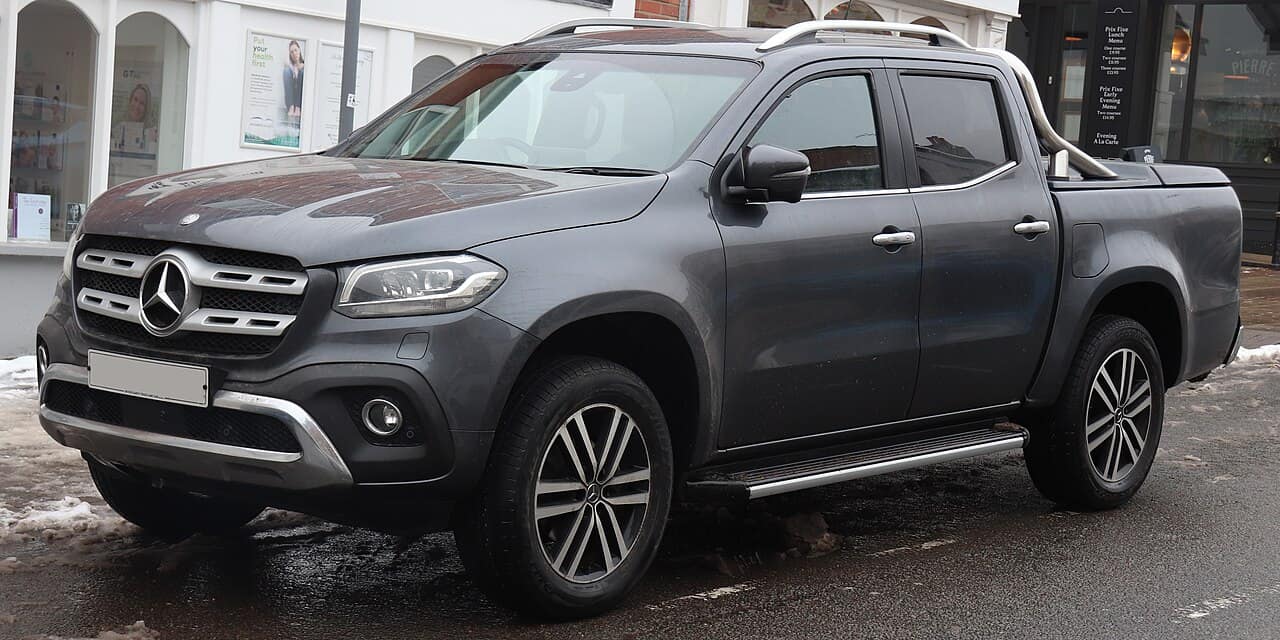
Fails the roadworthiness test 38% more often than the average car of the same age.
Selling a Mercedes-Benz X-Class?
You will post your ad in a few minutes – the make and model will already be selected in the form.
- Free: the listing stays live for 3 months and is renewed with one click.
- Buyers in Lithuania, Latvia, Estonia and Poland see your listing.
- Using an AI assistant such as Claude? Connect it – it can fill in the listing for you. How it works

Failure rate by year of manufacture
Most common reasons for failing
Which components most often cause a Mercedes-Benz X-Class to fail the roadworthiness test (share of failed tests, UK data).
- Exhaust emissions21%1,9× more often than average
- Mechanical brake parts16%1,6× more often than average
- Airbag system (SRS)15%9,2× more often than average
- Brake performance15%1,4× more often than average
- Wipers10%1,3× more often than average
- Tyre condition8%
- Tyre tread depth8%
- Headlamp aim7%
What to check when buying a used Mercedes-Benz X-Class
This list is based on the most common reasons a Mercedes-Benz X-Class fails the roadworthiness test – inspect these components first.
- Exhaust emissions – ask about exhaust repairs, the particulate filter and the catalytic converter; a cold engine should not produce heavy smoke on start-up.
- Mechanical brake parts – check the wear of brake discs and pads and whether the car pulls to one side when braking; ask a garage for a brake efficiency test.
- Airbag system (SRS) – check that no warning lights are on (especially the airbag light) and that the seat belts and electrics work.
- Wipers – check the wipers and washers – a small thing, but a common reason for failing.
- Check the history by VIN: mileage, damage and previous listings. Check the VIN
- If you are choosing between several years, the most reliable according to our data are: 2018, 2019, 2020.
- Before buying, take the car to an independent garage for diagnostics and a suspension check.
Frequently asked questions
Is the Mercedes-Benz X-Class reliable?
Fails the test more often. Fails the roadworthiness test 38% more often than the average car of the same age. 4 041 tests.
What are the most common Mercedes-Benz X-Class faults?
Most common reasons for failing: Exhaust emissions (21%), Mechanical brake parts (16%), Airbag system (SRS) (15%).
Which Mercedes-Benz X-Class years are the most reliable?
Compared with cars of the same age, the Mercedes-Benz X-Class built in 2018, 2019, 2020 fails the test least often.
Mercedes-Benz models
- Mercedes-Benz C-Class340 51489
- Mercedes-Benz A-Class327 07296
- Mercedes-Benz E-Class228 86483
- Mercedes-Benz Sprinter203 75095
- Mercedes-Benz Vito86 88991
- Mercedes-Benz GLA72 93984
- Mercedes-Benz GLC71 70778
- Mercedes-Benz B-Class66 58493
- Mercedes-Benz CLA53 597103
- Mercedes-Benz SLK52 02575
- Mercedes-Benz M-Class33 39579
- Mercedes-Benz GLE28 03575
How it is calculated
- We use only initial periodic roadworthiness tests (no retests). A failure means major or dangerous defects were found.
- Each year’s result is compared with the average of all vehicles of the same category and the same age, so old and new models are compared fairly.
- A reliability index of 100 is the average. 80 means the model fails the test 20% less often than the average car of the same age.
- We show only years with at least 30 tests and models with at least 200 tests.
Data sources
- Road Traffic Safety Directorate of Latvia (CSDD): roadworthiness tests 2024 (CC0).
- UK DVSA: anonymised MOT tests and results 2024 (Open Government Licence v3.0). Mileage converted to kilometres.
The statistics summarise thousands of cars and do not reflect the condition of any particular vehicle – check the car’s history and have it inspected before you buy.